Himalayan Balsam – Quick ID Guide (for volunteer pulls)
What to look for
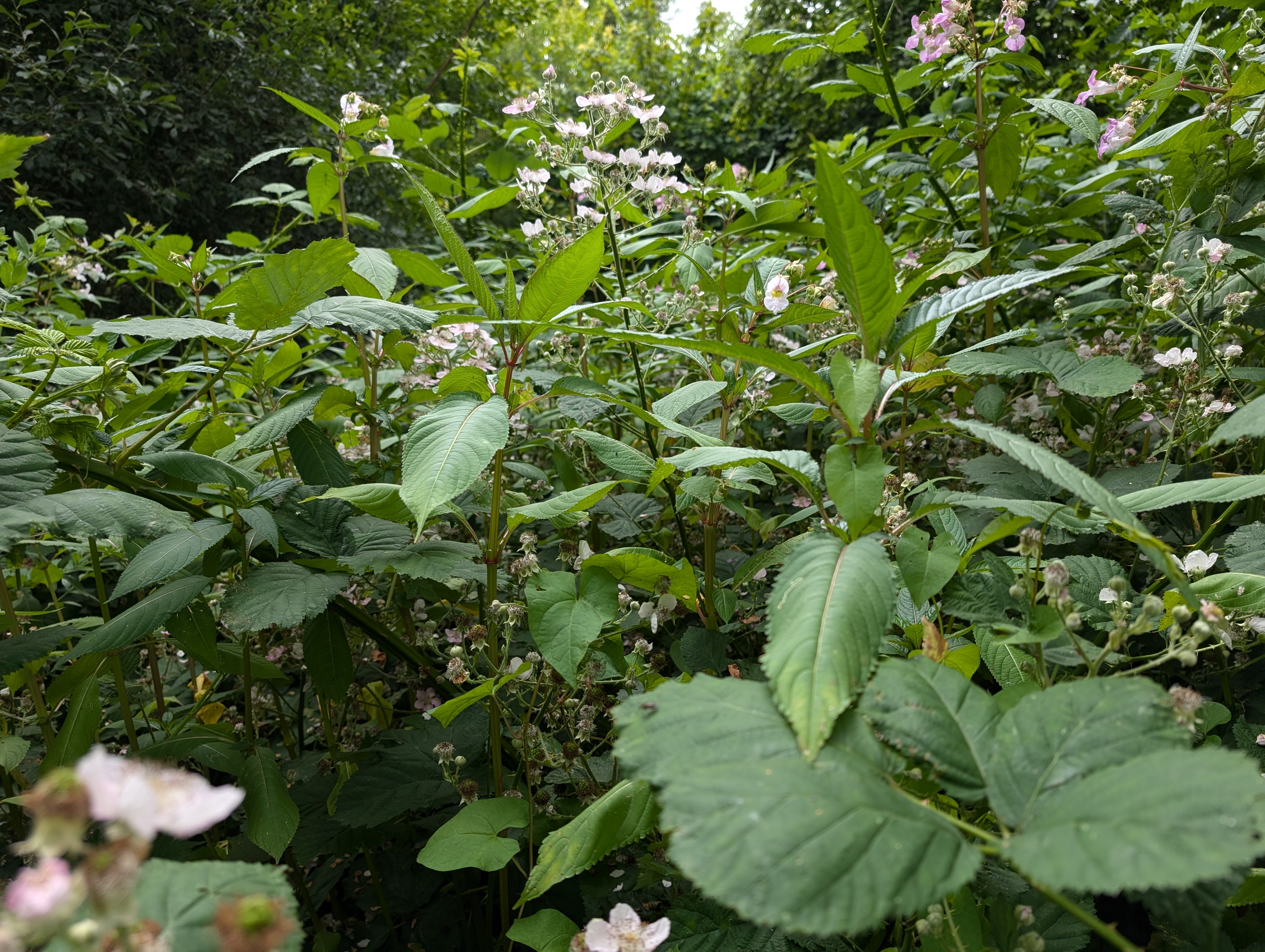
Habitat: damp ground – riverbanks, ditches, wet woodland edges and waste ground.
Stems: hollow, green often with red/pink flush; brittle.
Leaves: long, serrated; often in opposite pairs or whorls of three.
Flowers (later in season): pink-purple “policeman’s helmet” shape (typically summer).
Seed pods (later): green pods that burst/explode when ripe and touched.
Very Important Info!
If pods are ripe and popping → STOP pulling in that patch and tell the lead (risk of spreading seed).
If you are not 100% sure it is balsam → ask before pulling.
Do not touch unknown large umbellifers (giant hogweed-type plants) or plants suspected to be Japanese Knotweed – if unsure tell the lead.
Basic info: How to pull
Hold low near the base and pull steadily to remove roots.
Place pulled plants as directed (scatter and stamp to dry or stack in designated areas).
Keep paths clear and avoid trampling native plants.
After puling up balsam...
Check boots and clothing for seeds/plant fragments.
Wash hands (or sanitise) before eating/drinking.
Feel pleased that you have helped reduce this invasive species in your neighbourhood! Your work is really important and appreciated.